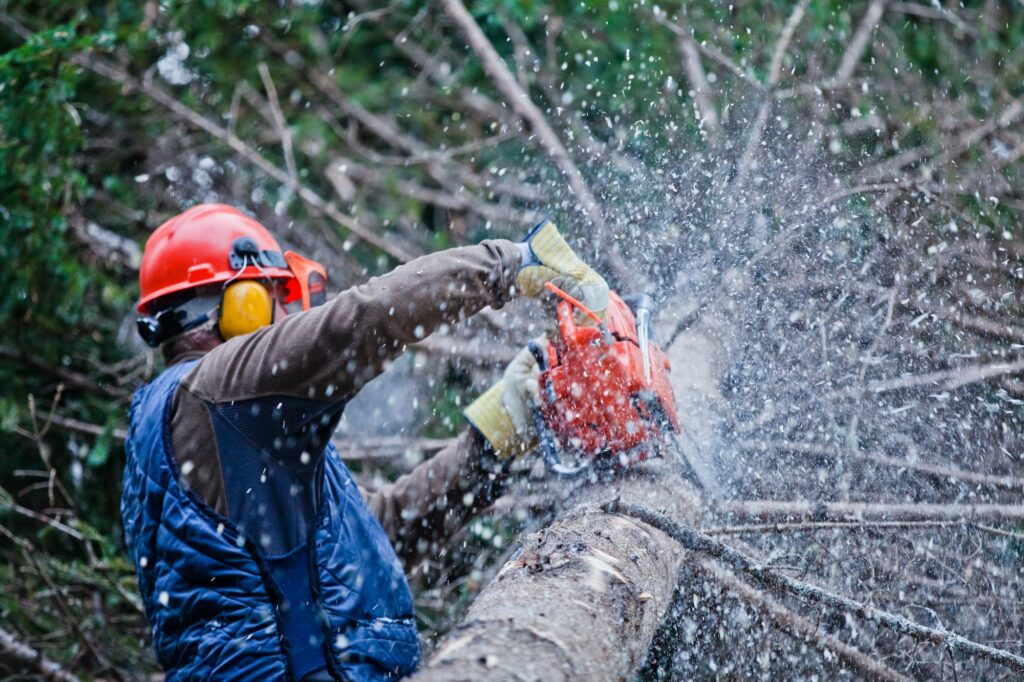
Alton’s bluff topography means that a significant number of residential properties are on grades that complicate both tree failure patterns and equipment access. Shallow soils over limestone bedrock are common along the bluff line, which limits how deep root systems can anchor. A large oak or silver maple that looks perfectly stable from the street can have a compromised root plate that only reveals itself when a storm puts lateral pressure on the trunk.
Working on sloped lots also changes the logistics of a removal. The direction a tree can safely fall is constrained by the terrain. Staging areas for equipment are limited. A company showing up with only a standard bucket truck may find itself unable to position safely on a steep Alton lot, which is exactly why Arbor Junkies maintains spider lifts that can operate on grades and in confined spaces that larger equipment cannot access.
The historic residential neighborhoods near Downtown Alton, along Broadway, and through the corridors climbing toward the upper bluff carry trees that have been growing since the early and mid-twentieth century. Trunk diameters measured in feet. Root systems that have spent decades integrating with sidewalks, utility infrastructure, and foundations. Canopies that spread well beyond the boundaries of the lot they’re on.
These trees are not standard removals. They require careful planning, experienced judgment about how the tree will behave as sections are removed, and equipment capable of controlling the process from height. When a tree of this size comes down wrong, the consequences are serious. When it comes down right, the property is better for having the work done by someone who knew what they were doing.
The older sections of Alton were not designed with modern tree service equipment in mind. Streets near the historic downtown, the neighborhoods along Henry Street and Alby Street, and the residential corridors closer to the river are narrow. Parking is tight. Overhead lines are low. The distance between a tree that needs to come down and a structure that needs to stay intact is often measured in feet rather than yards.
This is precisely the environment where the difference between a company with the right equipment and one without it becomes apparent. Spider lifts can navigate these spaces. They can reach height through a narrow opening, position over a structure, and control a removal in a way that a standard bucket truck parked at the curb simply cannot achieve in many Alton locations.
It deserves its own section because it’s that significant.
The Emerald Ash Borer has been moving through Madison County’s tree inventory for over a decade, and Alton’s older neighborhoods were heavily stocked with ash trees. Many of those trees are now dead or in advanced decline. Some property owners have been managing the situation proactively. Others have been watching and waiting, which is understandable until it becomes dangerous.
A dead or dying ash tree behaves differently than a healthy tree under stress. The wood dries out rapidly, becomes brittle, and loses its predictability. Ash trees in late-stage decline can drop large sections with very little warning and without the kind of visible distress signals that precede failure in other species. A tree that looked manageable in the fall can be genuinely hazardous by the following spring.
If there is an ash tree on your Alton property that hasn’t been assessed recently, that assessment is worth scheduling before the next storm season. Eric will walk the tree, evaluate its structural condition honestly, and give you a clear picture of the risk level and the options. Sometimes a declining ash has more time than it appears. Sometimes it doesn’t. Either way, the information is worth having.
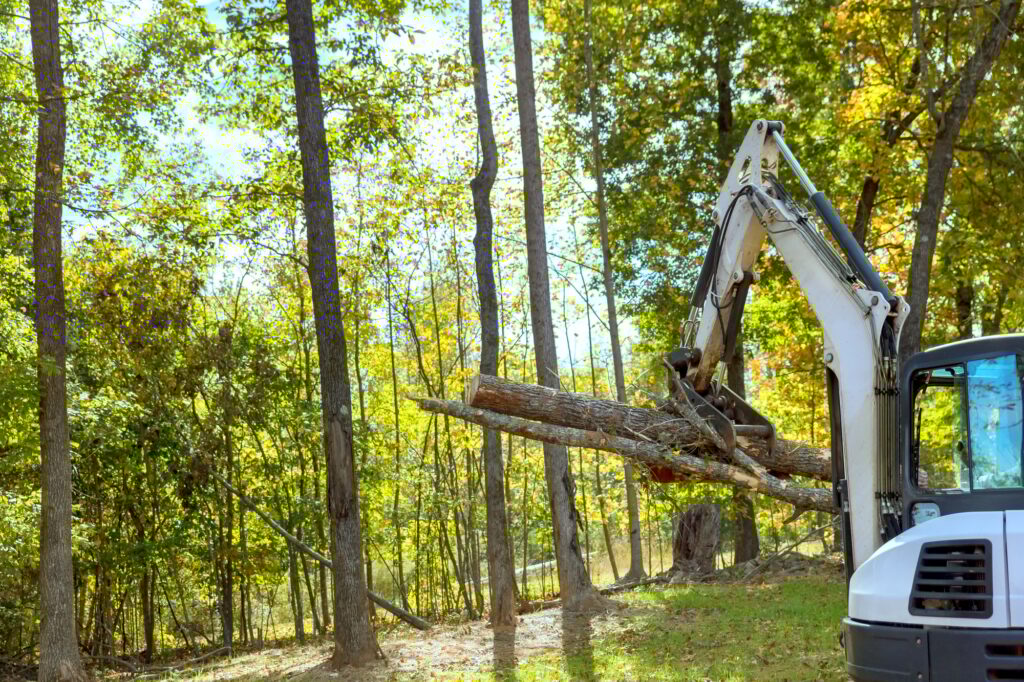
No two properties in Alton are the same, but the jobs that come up most frequently follow recognizable patterns.
A homeowner on one of the older streets near the bluff line has a large silver maple that has been dropping limbs over the driveway for two seasons. The canopy overhangs the roof on one side and the neighbor’s fence on the other. The yard slopes away from the house, and there’s no clean staging area for equipment. Eric walks the property, identifies the safest removal sequence, determines that the spider lift is the right tool for the access constraints, and the job gets planned before a single cut is made.
A property near the river corridor has a cottonwood that came down partially in a storm. The main trunk is still standing but a major scaffold branch is hanging, held in place by bark tension and the surrounding canopy. This is a situation that looks stable and isn’t. The hanging section needs to come down in a controlled way before it comes down on its own, and the work requires someone who understands how trees hold tension and release it.
A homeowner in one of Alton’s newer outer residential areas wants a full removal, stump grinding, and the area graded and prepped for a landscaping project. This is a complete scope job, and Arbor Junkies handles every part of it in-house. Removal through ground preparation, one crew, one conversation, no subcontractors.
Arbor Junkies works throughout Alton’s neighborhoods, from the historic downtown corridors and bluff-line properties to the outer residential areas and commercial parcels, along with communities across Madison County including: